Post-Flood Sanitization: Steps for Apache Junction Homes
· By Apache Junction Water Damage
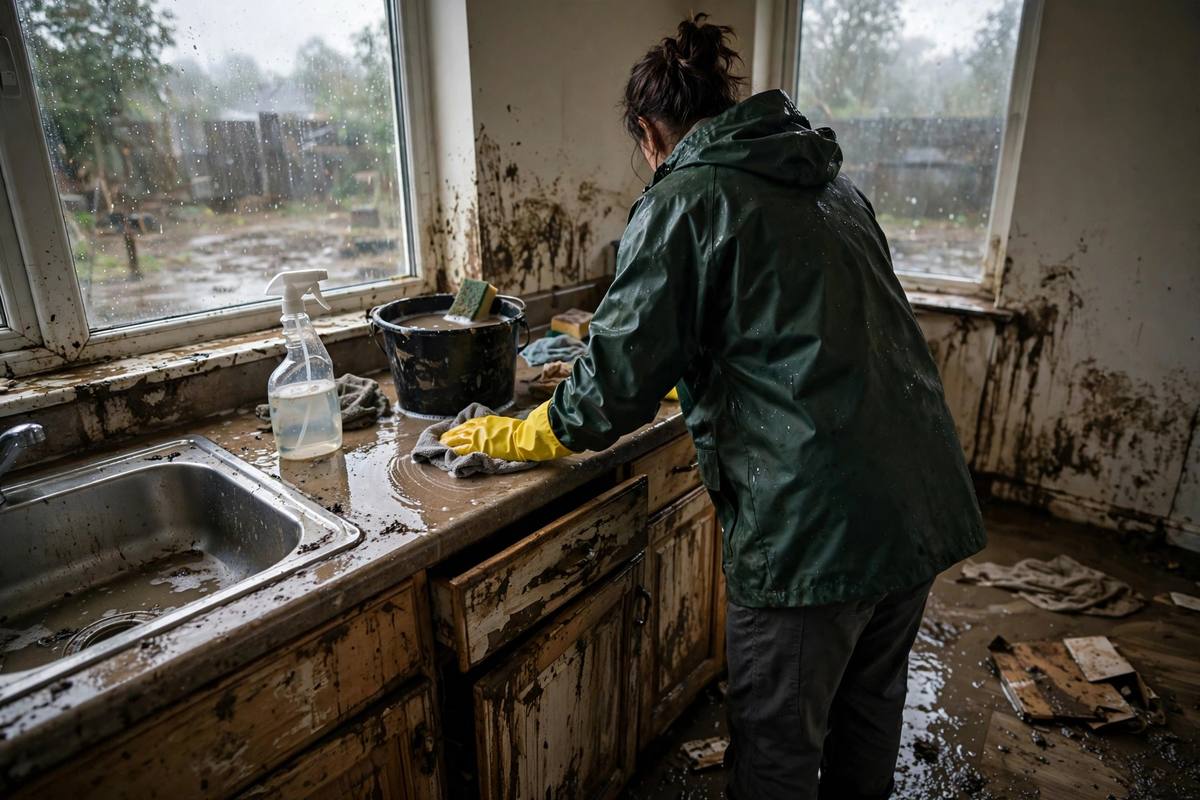
When floodwater invades a home — whether from a monsoon flash flood, a major plumbing failure, or a sewage backup — pumping the water out feels like the finish line. It is not. Floodwater, especially water that has contacted the ground or drains, deposits bacteria, chemicals, and organic matter on every surface it touches. Without proper sanitization, those contaminants remain in your floors, walls, and air long after the water is gone.
Here is how professional post-flood sanitization works, step by step.
Step 1: Complete Water Removal
Sanitization cannot begin until all standing water is extracted and saturated materials are removed. Porous materials that contacted contaminated floodwater — carpet and pad, drywall below the water line, insulation — are cut out and discarded, not disinfected in place. No sanitizer can reliably penetrate soaked porous materials, and trying to save them just preserves the contamination.
Step 2: Thorough Cleaning Before Disinfecting
This step is widely skipped and critically important: disinfectants do not work well on dirty surfaces. Every remaining hard surface — concrete, framing, subfloors — is first cleaned of mud, silt, and debris. Floodwater leaves a film of fine sediment that shields microorganisms from sanitizers; it must be physically removed with detergent cleaning and rinsing before disinfection has a chance.
Step 3: Apply EPA-Registered Disinfectants
Professionals apply EPA-registered antimicrobial products rated for the contamination present, following label directions exactly — including the dwell time, the minutes the surface must stay wet for the product to work. Rushing this step is the most common DIY failure. Application covers all flood-contacted structural surfaces: wall framing, subfloors, concrete slabs, and the interior of wall cavities that were opened.
Step 4: Address the Air
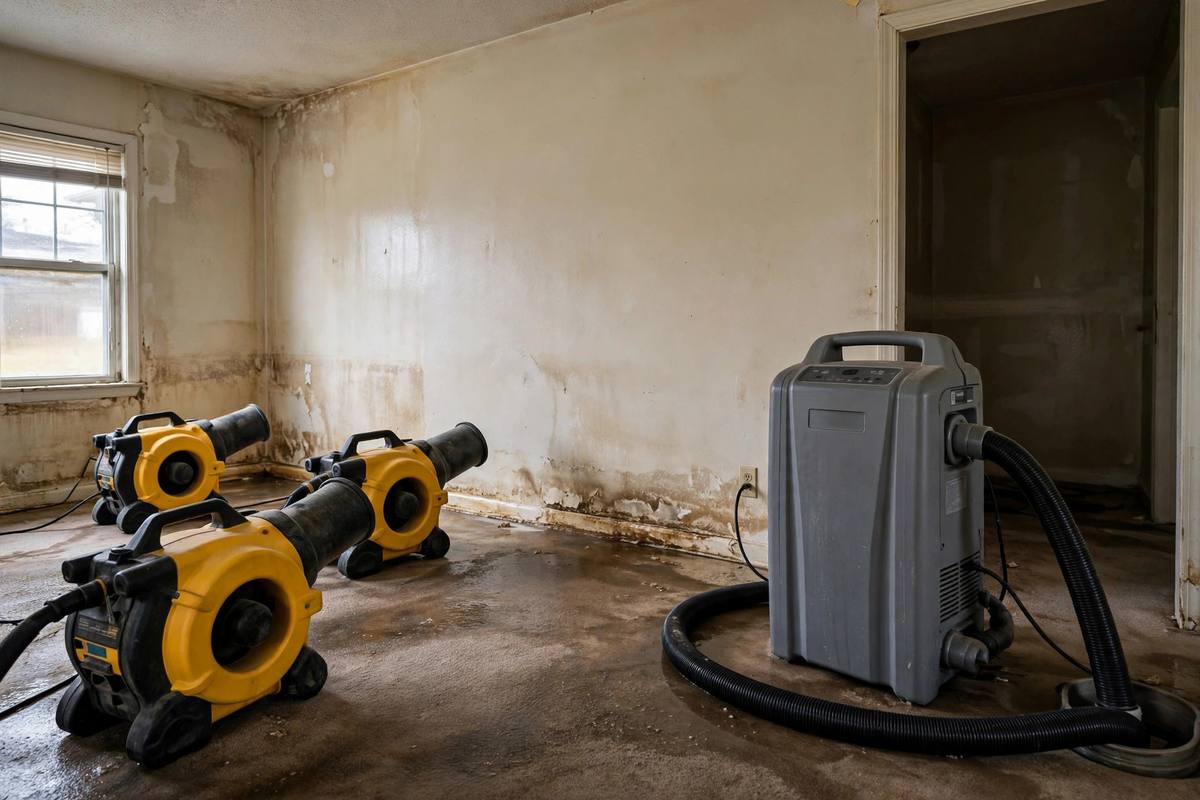
Flood work aerosolizes contaminants. HEPA-filtered air scrubbers run during and after sanitization to capture airborne particles, and in significant cases, HVAC ducts that were exposed need inspection and cleaning. If the system ran while contamination was present, ducts may have distributed it through the house.
Step 5: Dry to Verified Standards
Sanitized but still-damp framing will grow mold regardless of disinfection. Structural drying continues until moisture meters confirm dry standards throughout — sanitization and drying are partners, not alternatives.
What Homeowners Should and Should Not Do
For clean-water incidents (a supply line flood with no ground contact), homeowner cleanup with proper protection and thorough drying is often reasonable. For any flood involving outdoor water, drain backups, or sewage, do not DIY the sanitization — the contamination risks and the demolition judgment calls require professional protocols. Never mix bleach with other cleaners, never assume a surface is safe because it looks clean, and never skip protective gear: gloves, boots, eye protection, and respiratory protection are non-negotiable around flood contamination.
Our network provides flood damage restoration with full sanitization protocols, plus sewage backup cleanup for the most contaminated scenarios — done to professional standards, documented for your records.
Learn more about complete recovery from water damage restoration in Apache Junction.
Soft Contents: What Can Be Sanitized and What Cannot
Structure gets the most attention after a flood, but your belongings need sanitization decisions too. Hard, non-porous items — dishes, glassware, metal fixtures, sealed plastics — can usually be cleaned and disinfected successfully. Washable textiles like clothing and linens often survive with hot-water laundering and thorough drying, though contaminated loads should be handled with gloves and washed separately.
Upholstered furniture, mattresses, and pillows that absorbed contaminated floodwater are a different story: their porous interiors cannot be reliably disinfected, and most professionals recommend discarding them after Category 2 or 3 exposure. Important documents and photos have a special option — freeze-drying by document recovery specialists can save papers that would otherwise be lost. When in doubt, separate questionable items from clean ones immediately to prevent cross-contamination, and let the restoration crew assess what is salvageable.
Dealing with flood aftermath? Do not skip sanitization — call (408) 357-2008. We connect you with local providers for safe, thorough flood recovery across Apache Junction and Phoenix.