Structural Drying Equipment: How It Saves AZ Homes
· By Apache Junction Water Damage
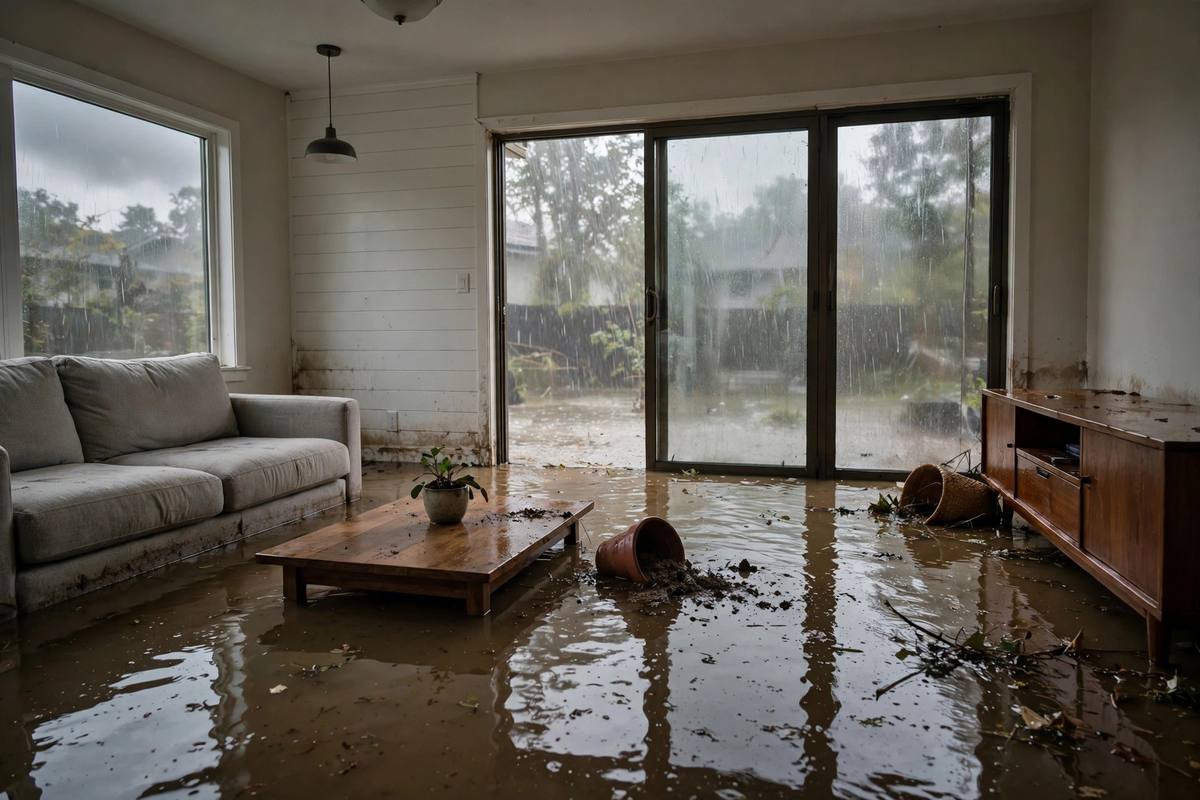
After water extraction, most homeowners assume the job is nearly done: the visible water is gone, so the house just needs to air out. In reality, the most damaging moisture is the water you cannot see — soaked into drywall, trapped under flooring, absorbed by framing and subfloors. That hidden moisture is what rots wood, crumbles drywall, and grows mold, and removing it requires purpose-built equipment operated to a plan.
Here is what professional structural drying actually involves.
The Drying System: Four Parts Working Together
Air movers
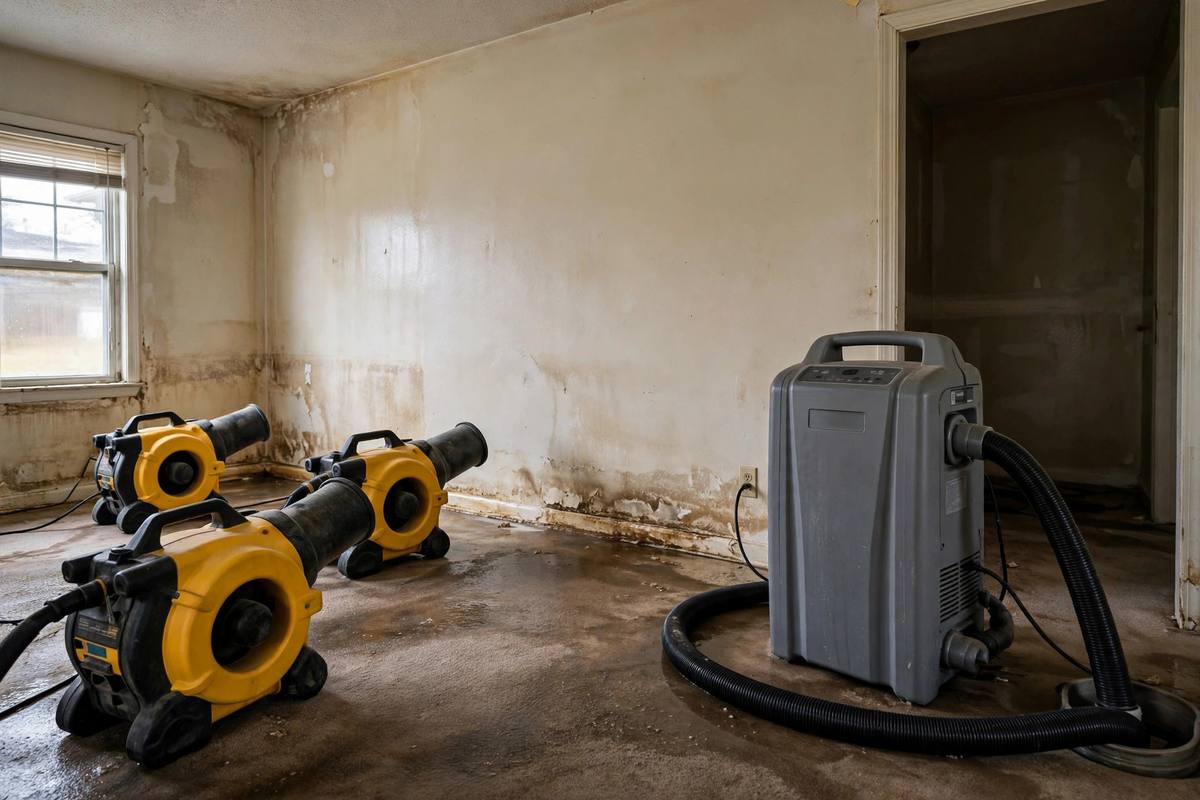
These are not household fans. High-velocity air movers direct focused airflow across wet surfaces at precise angles, constantly replacing the thin layer of humid air that forms over damp materials. That boundary layer is what slows natural drying to a crawl; air movers strip it away so evaporation can continue at full speed. Technicians position them to create airflow patterns across walls, under cabinets, and along floors.
Dehumidifiers (LGR and desiccant)
Evaporation puts moisture into the air — dehumidifiers pull it back out. Low-grain refrigerant (LGR) units wring humidity down to very low levels even in already-dry air, while desiccant units use chemical absorbents for deep drying of dense materials. Without dehumidification, evaporated moisture just re-condenses on cooler surfaces elsewhere in the house.
Air scrubbers and filtration
HEPA-filtered air scrubbers capture airborne mold spores, dust, and particulates stirred up during drying and demolition. They protect the home's air quality and prevent cross-contamination into unaffected rooms.
Moisture meters and thermal cameras
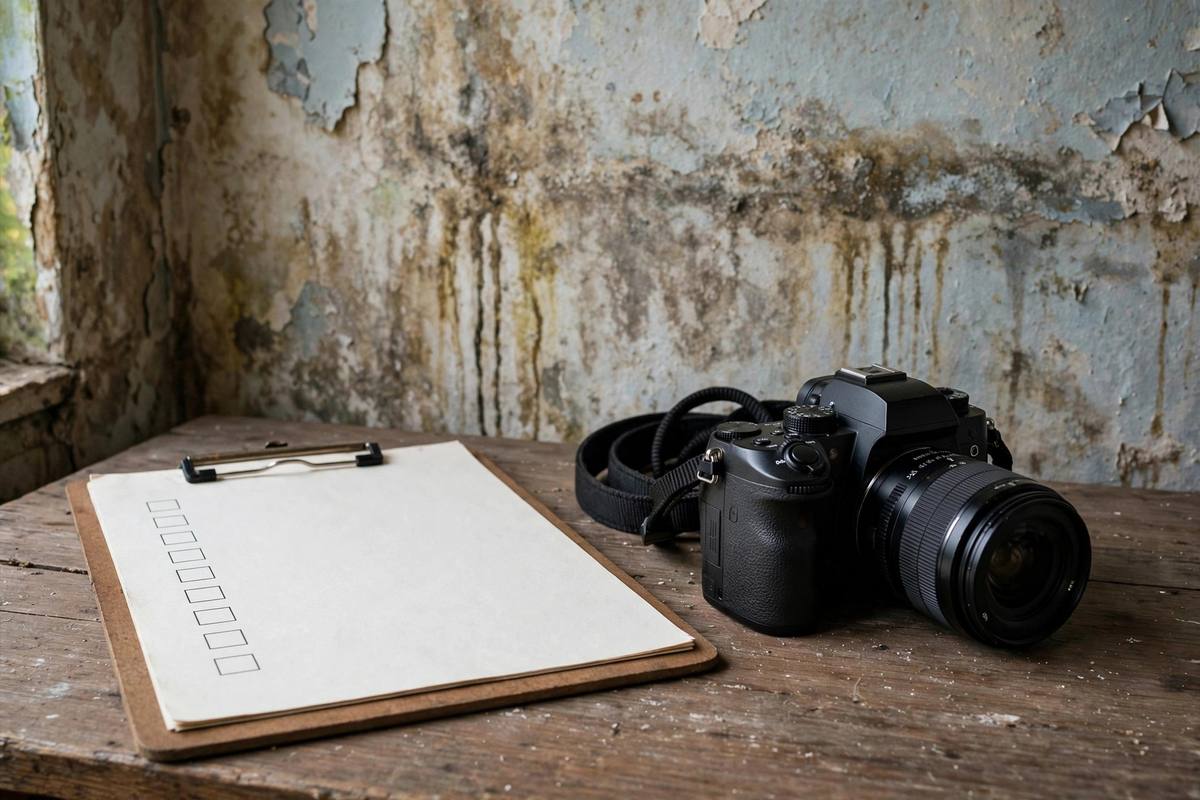
Pros do not guess — they measure. Pin and pinless moisture meters read moisture content inside walls and wood, thermal cameras reveal cold (wet) patterns behind surfaces, and hygrometers track the air. Drying continues until readings hit verified dry standards, not until things "look dry."
Why Desert Heat Is Not Enough
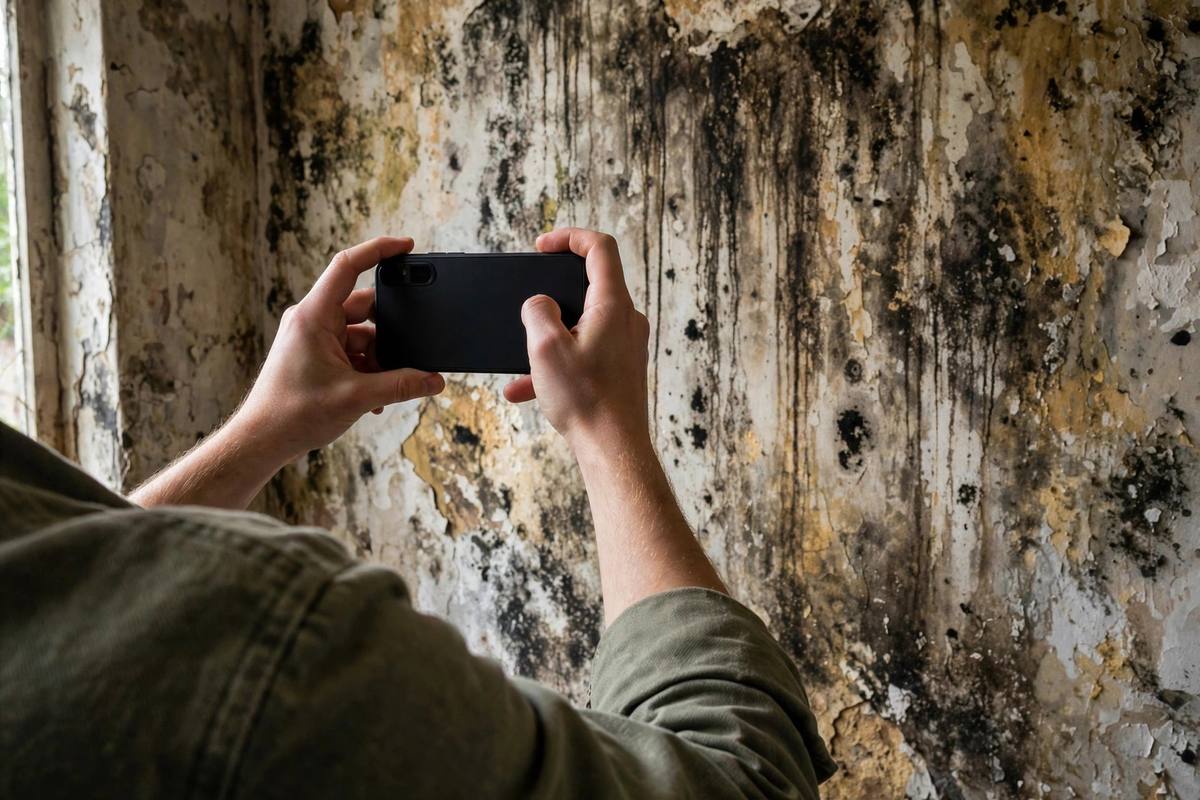
Arizona's dry air seems like nature's dehumidifier, but it only dries surfaces. Moisture trapped inside a wall cavity or under tile equalizes slowly, and our intense heat can actually bake the surface dry while sealing moisture inside — creating a perfect hidden mold incubator. Professional drying forces air into those cavities (sometimes through small, strategic openings) and verifies with meters that the inside is as dry as the outside.
What Proper Drying Prevents
Thorough structural drying prevents the cascade of secondary damage: mold growth in wall cavities, delamination of flooring, warping of framing, musty odors that never leave, and the slow deterioration of drywall that crumbles months later. Skipping it is the most expensive "saving" in water damage — the problems it prevents cost far more than the drying itself.
When water has soaked into your home's structure, our network's structural drying services bring the equipment and the measurement discipline to get it truly dry, as part of complete water damage restoration.
See how Apache Junction water damage restoration services approach drying scientifically, not hopefully.
Specialty Tools: Drying Mats and Wall-Cavity Systems
Beyond the standard air movers and dehumidifiers, restoration pros deploy specialty equipment for stubborn situations. Floor drying mats seal against hardwood or tile and use directed suction to pull moisture straight up through the material — the go-to approach for saving wood floors that would otherwise cup beyond recovery. For wall cavities, technicians may use injection drying: small holes (later patched) allow warm, dry air to be forced directly into the cavity, drying the inside of the wall rather than waiting for moisture to migrate out through the drywall.
Desiccant dehumidifiers deserve a mention too. Unlike refrigerant units, which lose efficiency as air gets drier, desiccants use chemical absorbents to keep pulling moisture even at very low humidity — ideal for dense materials like plaster, concrete, and thick wood. The right tool for the material is what separates professional drying from running fans and hoping.
Walls or floors still damp after a leak? Surface-dry is not dry — call (408) 357-2008. We connect you with local providers for professional structural drying across the Phoenix metro.