AC Condensate Drain Line Floods: Phoenix Homeowner Guide
· By Apache Junction Water Damage
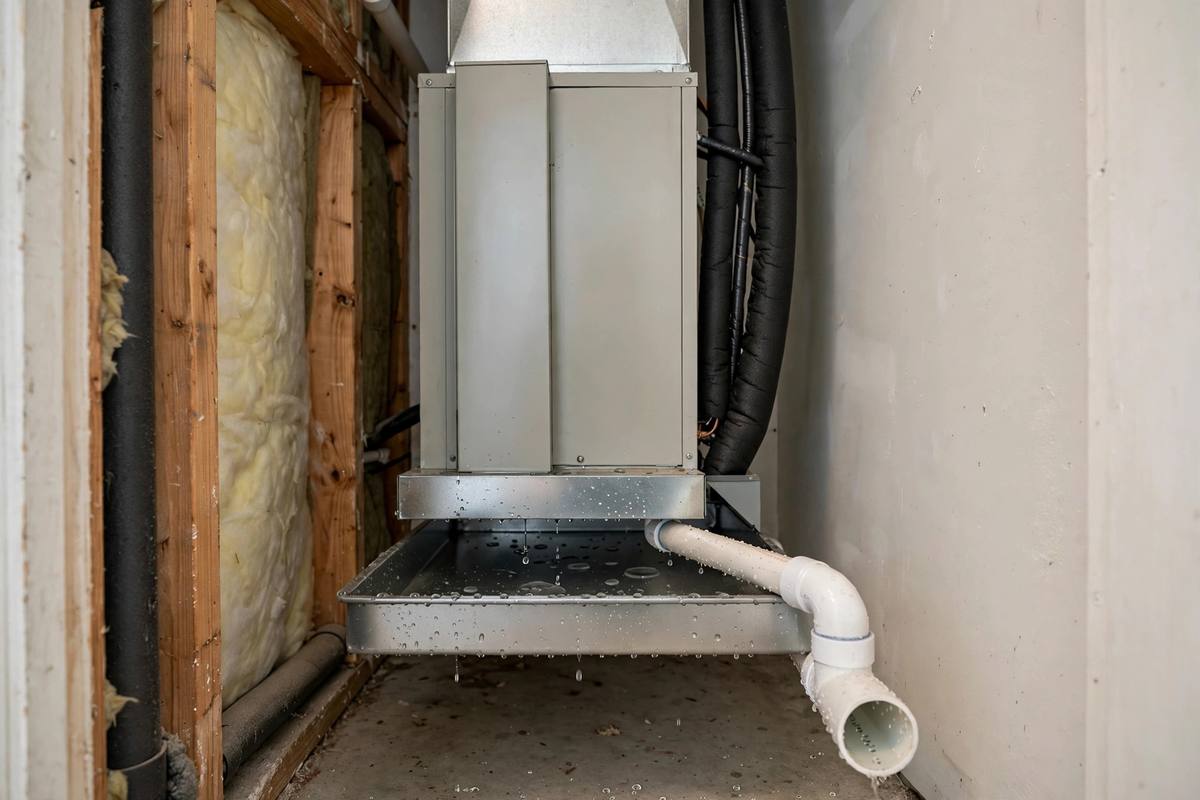
Phoenix air conditioners run nearly nonstop from May through October, and every cooling cycle pulls moisture out of the air. All of that condensate drains through a single narrow PVC line — usually only 3/4 of an inch wide. When algae, dust, and desert grit clog that line, water backs up into the overflow pan, and once the pan fills, it spills into ceilings, walls, and floors. It is one of the most common causes of indoor flooding we hear about in Valley homes.
The good news: condensate floods are almost entirely preventable with basic maintenance.
How the Condensate Drain System Works
As warm indoor air passes over the cold evaporator coil, moisture condenses and drips into a drain pan beneath the coil. From there it flows through the condensate drain line to the outside of your home or into a plumbing drain. Many systems also have a secondary overflow pan under the entire air handler, plus a float switch designed to shut the AC off when water rises too high. When any part of this chain fails — a clogged primary line, a rusted-through pan, or a failed float switch — water goes where it should not.
Warning Signs of a Clogged Drain Line
Water stains on ceilings or walls
Air handlers often sit in attics or closets above living spaces, so the first sign is frequently a yellow-brown stain spreading across a ceiling. By the time you see it, water has been leaking for a while.
Musty odors near vents
Standing water in a pan or line grows algae and bacteria fast in a hot attic. A musty smell when the AC kicks on can mean water is sitting where it should be flowing.
The AC shuts off unexpectedly
If your float switch is working, it will kill the system when the pan fills. An AC that stops on the hottest day of the year is miserable — but it is doing its job. Do not just reset it; find the water.
Water around the indoor unit
Puddles near a closet or garage air handler, or dripping from an attic access panel, are late-stage warnings. Shut the system off and investigate.
Prevention: A 15-Minute Seasonal Routine
At the start of cooling season and once mid-summer, pour a cup of distilled white vinegar (or a manufacturer-approved algaecide tablet) into the condensate line's access vent and let it sit for 30 minutes before flushing with water. This kills the algae that causes most clogs. Keep the area around the outdoor drain termination clear of landscaping so you can confirm water is actually flowing out on hot days — a dry termination while the AC runs hard is a red flag. Replace the air filter on schedule, because a dirty filter lets dust reach the coil and wash into the drain. And if your system lacks a float switch or a secondary pan, ask an HVAC tech about adding them; they are inexpensive insurance.
What to Do When Water Appears
First, turn the AC off at the thermostat to stop more condensate from forming. Mop up or wet-vac standing water, and place a bucket under any active drip. Do not ignore a ceiling stain — water trapped above drywall keeps spreading and invites mold within days in our heat. If drywall is sagging, carpet is soaked, or the leak has run for more than a day, professional help is warranted. Our network includes providers of water damage restoration and structural drying services who can extract the water, dry the structure, and check for hidden moisture behind walls.
Learn more about local water damage experts serving Phoenix and Apache Junction, and save our number before cooling season peaks.
Seeing water around your AC? Shut the system off and call (408) 357-2008. We connect you with local providers for fast extraction and drying across the Phoenix metro.